POMT2, LGMD2N, MDDGA2, MDDGB2, MDDGC2, protein O-mannosyltransferase 2, LGMDR14
External IDs
MGI: 2444430 HomoloGene: 5297 GeneCards: POMT2
Gene location (Human)
Chr.
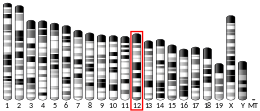
Chromosome 14 (human)[1]
Band
14q24.3
Start
77,274,956 bp[1]
End
77,320,884 bp[1]
Gene location (Mouse)
Chr.
Chromosome 12 (mouse)[2]
Band
12|12 D2
Start
87,106,861 bp[2]
End
87,147,968 bp[2]
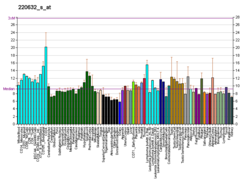
RNA expression pattern
More reference expression data
Gene ontology
Molecular function
• transferase activity, transferring glycosyl groups • dolichyl-phosphate-mannose-protein mannosyltransferase activity • transferase activity • mannosyltransferase activity • metal ion binding
Cellular component
• integral component of membrane • endoplasmic reticulum • membrane • endoplasmic reticulum membrane
Biological process
• protein O-linked glycosylation • protein O-linked mannosylation • ER-associated misfolded protein catabolic process • mannosylation • positive regulation of protein O-linked glycosylation • protein glycosylation
Sources:Amigo / QuickGO
Orthologs
Species
Human
Mouse
Entrez
29954
217734
Ensembl
ENSG00000009830
ENSMUSG00000034126
UniProt
Q9UKY4
Q8BGQ4
RefSeq (mRNA)
NM_013382
NM_153415
RefSeq (protein)
NP_037514
NP_700464
Location (UCSC)
Chr 14: 77.27 – 77.32 Mb
Chr 12: 87.11 – 87.15 Mb
PubMed search
[3]
[4]
Wikidata
View/Edit Human
View/Edit Mouse
Protein O-mannosyl-transferase 2 is an enzyme that in humans is encoded by the POMT2 gene.[5][6][7]
Contents
1Function
2References
3Further reading
4External links
Function[edit]
POMT2 encodes an integral membrane protein of the endoplasmic reticulum (ER) that shares significant sequence similarity with a family of protein O-mannosyltransferases of S. cerevisiae. For additional background information, see POMT1 (MIM 607423).[supplied by OMIM][7]
References[edit]
^ abcGRCh38: Ensembl release 89: ENSG00000009830 - Ensembl, May 2017
^ abcGRCm38: Ensembl release 89: ENSMUSG00000034126 - Ensembl, May 2017
^Fukuda S, Sumii M, Masuda Y, Takahashi M, Koike N, Teishima J, Yasumoto H, Itamoto T, Asahara T, Dohi K, Kamiya K (Feb 2001). "Murine and human SDF2L1 is an endoplasmic reticulum stress-inducible gene and encodes a new member of the Pmt/rt protein family". Biochem Biophys Res Commun. 280 (1): 407–14. doi:10.1006/bbrc.2000.4111. PMID 11162531.
^Willer T, Amselgruber W, Deutzmann R, Strahl S (Dec 2002). "Characterization of POMT2, a novel member of the PMT protein O-mannosyltransferase family specifically localized to the acrosome of mammalian spermatids". Glycobiology. 12 (11): 771–83. doi:10.1093/glycob/cwf086. PMID 12460945.
Bonaldo MF, Lennon G, Soares MB (1997). "Normalization and subtraction: two approaches to facilitate gene discovery". Genome Res. 6 (9): 791–806. doi:10.1101/gr.6.9.791. PMID 8889548.
Strausberg RL, Feingold EA, Grouse LH, et al. (2003). "Generation and initial analysis of more than 15,000 full-length human and mouse cDNA sequences". Proc. Natl. Acad. Sci. U.S.A. 99 (26): 16899–903. doi:10.1073/pnas.242603899. PMC 139241. PMID 12477932.
Heilig R, Eckenberg R, Petit JL, et al. (2003). "The DNA sequence and analysis of human chromosome 14". Nature. 421 (6923): 601–7. doi:10.1038/nature01348. PMID 12508121.
Manya H, Chiba A, Yoshida A, et al. (2004). "Demonstration of mammalian protein O-mannosyltransferase activity: Coexpression of POMT1 and POMT2 required for enzymatic activity". Proc. Natl. Acad. Sci. U.S.A. 101 (2): 500–5. doi:10.1073/pnas.0307228101. PMC 327176. PMID 14699049.
Ota T, Suzuki Y, Nishikawa T, et al. (2004). "Complete sequencing and characterization of 21,243 full-length human cDNAs". Nat. Genet. 36 (1): 40–5. doi:10.1038/ng1285. PMID 14702039.
Gerhard DS, Wagner L, Feingold EA, et al. (2004). "The Status, Quality, and Expansion of the NIH Full-Length cDNA Project: The Mammalian Gene Collection (MGC)". Genome Res. 14 (10B): 2121–7. doi:10.1101/gr.2596504. PMC 528928. PMID 15489334.
van Reeuwijk J, Janssen M, van den Elzen C, et al. (2006). "POMT2 mutations cause α-dystroglycan hypoglycosylation and Walker-Warburg syndrome". J. Med. Genet. 42 (12): 907–12. doi:10.1136/jmg.2005.031963. PMC 1735967. PMID 15894594.
Kimura K, Wakamatsu A, Suzuki Y, et al. (2006). "Diversification of transcriptional modulation: Large-scale identification and characterization of putative alternative promoters of human genes". Genome Res. 16 (1): 55–65. doi:10.1101/gr.4039406. PMC 1356129. PMID 16344560.
Akasaka-Manya K, Manya H, Nakajima A, et al. (2006). "Physical and functional association of human protein O-mannosyltransferases 1 and 2". J. Biol. Chem. 281 (28): 19339–45. doi:10.1074/jbc.M601091200. PMID 16698797.
Yanagisawa A, Bouchet C, Van den Bergh PY, et al. (2007). "New POMT2 mutations causing congenital muscular dystrophy: identification of a founder mutation". Neurology. 69 (12): 1254–60. doi:10.1212/01.wnl.0000268489.60809.c4. PMID 17634419.
Biancheri R, Falace A, Tessa A, et al. (2007). "POMT2 gene mutation in limb-girdle muscular dystrophy with inflammatory changes". Biochem. Biophys. Res. Commun. 363 (4): 1033–7. doi:10.1016/j.bbrc.2007.09.066. PMID 17923109.
External links[edit]
GeneReviews/NCBI/NIH/UW entry on Congenital Muscular Dystrophy Overview
0
Multi page form doesn't track abandonment properly when page reloads Hi I have been using the GTM technique detailed by Simo Ahava to track form abandonment and the event is being returned to GA but not correctly. The 3rd party form I am tracking is multipage and you click submit input buttons to move to each new page. This submit button is triggering the form abandonment event even though I am on the same form and have not finished it yet. The form action points to the page itself and so the page url never changes, even on the thank you page. How can configure GTM to ignore these submissions/ reloads and only fire the abandonment when the browser window is closed? https://www.simoahava.com/analytics/track-form-abandonment-with-google-tag-manager/ simo #abandonment #fromtracking¢
...
Help:Taxon identifiers From Wikipedia, the free encyclopedia Jump to navigation Jump to search For help with the Wikipedia template, see Template:Taxonbar. This is an information page. It describes the editing community's established practice on some aspect or aspects of Wikipedia's norms and customs. It is not one of Wikipedia's policies or guidelines, as it has not been thoroughly vetted by the community. .mw-parser-output .module-shortcutboxplain{float:right;border:1px solid #aaa;background:#fff;margin:0 0 0 1em;padding:.3em .6em .2em .6em;text-align:center;font-size:85%;font-weight:bold}.mw-parser-output .module-shortcutlist{display:inline-block;border-bottom:1px solid #aaa;margin-bottom:.2em;font-weight:normal}.mw-parser-output .module-shortcutanchordiv{position:relative;top:-3em} Shortcut H:TI Readers' FAQ and help About Wikipedia Administration FAQs Authority control Cat...







 Clash Royale CLAN TAG

